The Rise of F.P. Journe: From 20 Subscribers to the World’s Most Coveted Watchmaker
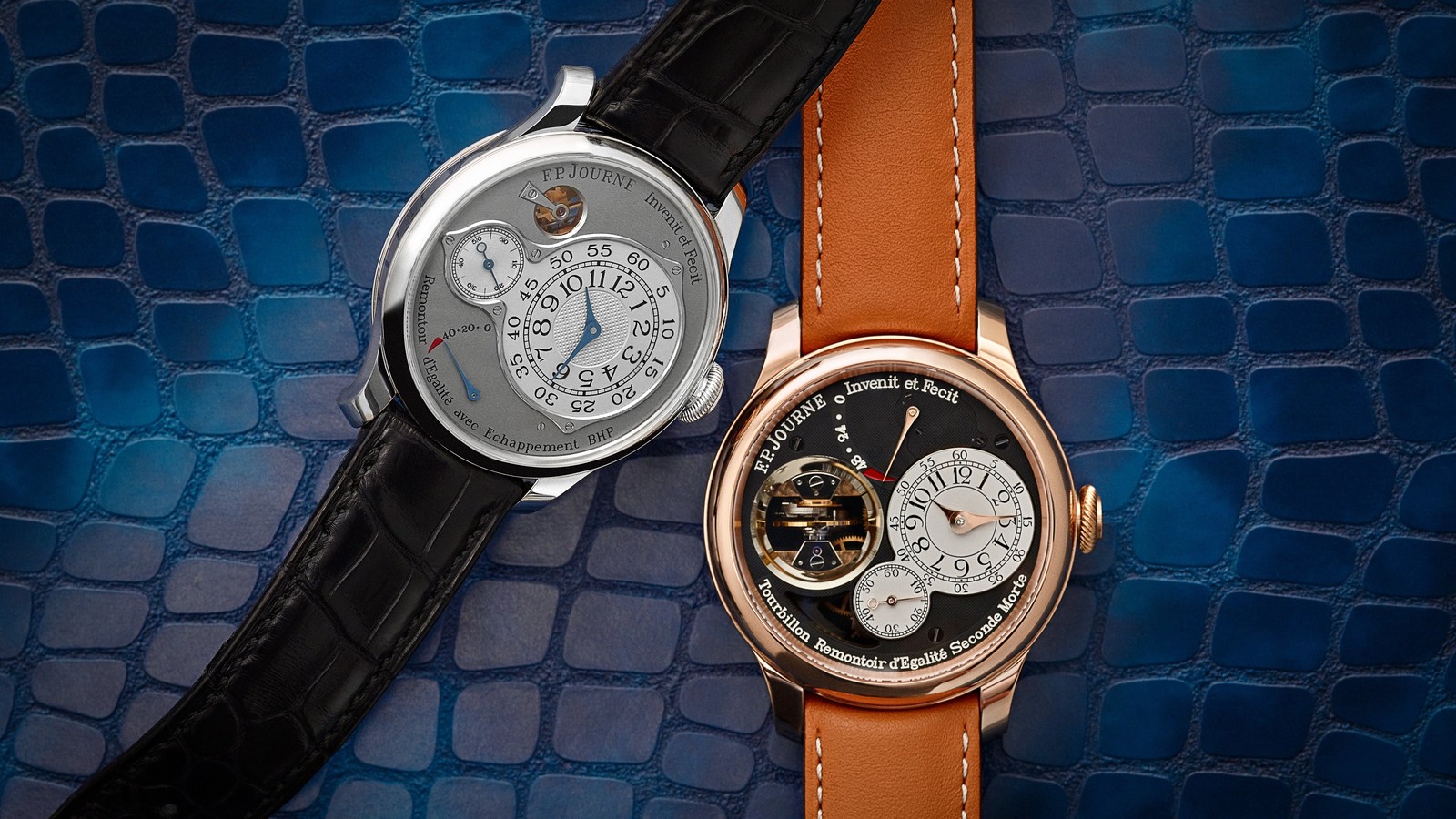
Few names in modern watchmaking carry the weight of F.P. Journe. In just over 25 years the brand has gone from a one-man workshop funded by 20 believers to the watch the entire independent scene is measured against — with waiting lists measured in years and early pieces crossing seven figures at auction. Here is how it happened, and where François-Paul Journe says it is going next.
The watchmaker before the brand
François-Paul Journe was born in Marseille in 1957 and graduated from the Paris watchmaking school in 1976. He learned the craft properly in the Paris workshop of his uncle, the antiquarian horologist Michel Journe, restoring centuries-old clocks and watches. That apprenticeship in old techniques never left him.
By his mid-twenties he was building tourbillon pocket watches entirely by hand — not school exercises but finished commissions for private collectors, the first completed after roughly five years of work. Through the 1980s and 1990s he worked as an independent constructor and restorer in Paris, making complicated pieces and prototypes for other established names. In that period he also began chasing the idea that would define him: resonance, the phenomenon by which two balance wheels beating side by side fall into sync and steady each other. He proved it first in a pocket watch.
The gamble: 20 subscribers
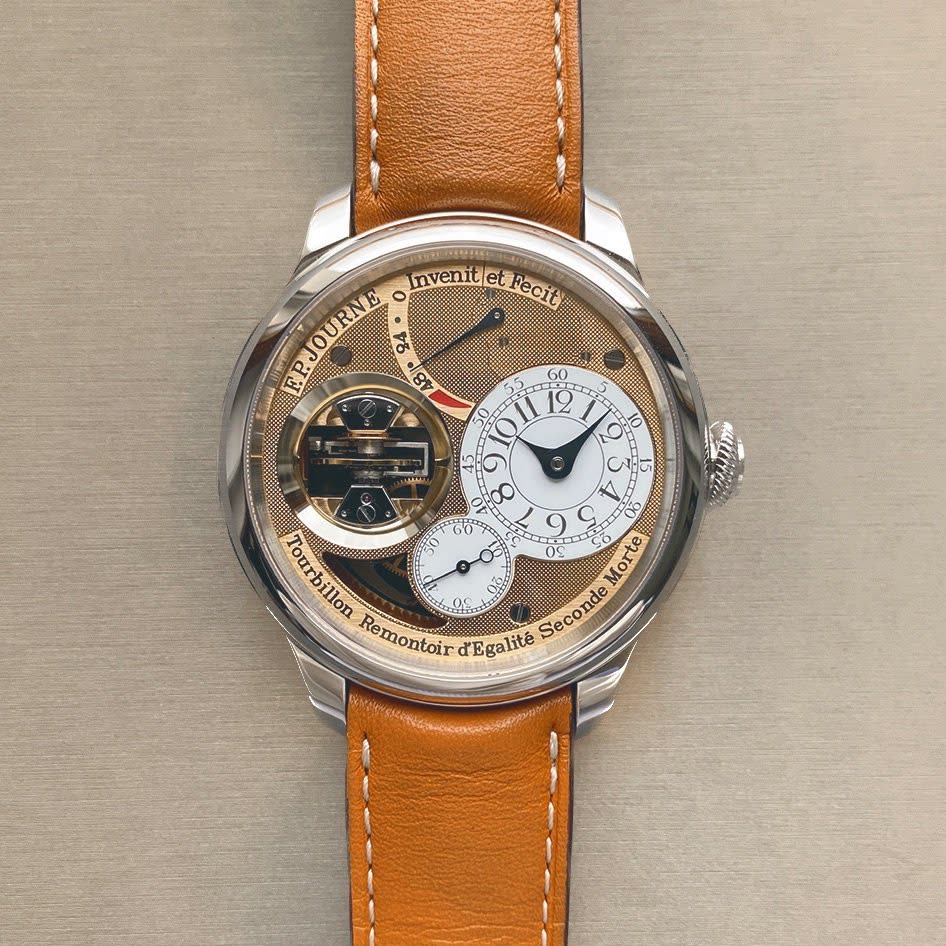
In 1999 Journe founded Montres Journe SA in Geneva. He had three tourbillon wristwatch prototypes and no capital to put them into production. So he revived a trick from Abraham-Louis Breguet’s era: the souscription. He found 20 collectors willing to pay in advance for a Tourbillon à remontoir d’égalité before it existed. Their deposits funded the company; in return they received roughly half off the eventual retail price and, in effect, became the brand’s first ambassadors.
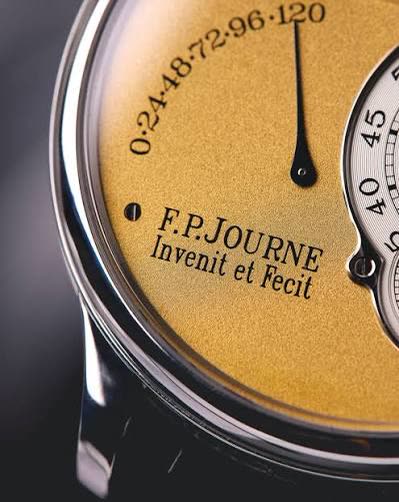
Those 20 hand-made “Souscription” watches are the genesis of F.P. Journe. Today they change hands for well over a million dollars. From day one the workshop carried the motto Invenit et Fecit — “invented and made” — meaning every calibre is both designed and built in-house.
Building a real manufacture
The pieces came quickly. In 2000 Journe released the Chronomètre à Résonance, the first wristwatch to use two independent movements beating in resonance. The Octa automatic family followed in 2001, and the grande-et-petite-sonnerie Sonnerie Souveraine in 2005, a watch that earned him ten patents.
Two decisions set the manufacture apart. From 2004, Journe switched his movement plates and bridges to solid 18-carat rose gold — effectively unheard of in series production — for stability and sheer conviction. And in 2012 he opened his own dial company, Les Cadraniers de Genève, and case company, Les Boîtiers de Genève, in Meyrin, so those parts are made to his standard rather than bought in.
The recognition followed. F.P. Journe has won watchmaking’s top prize, the GPHG Aiguille d’Or, three times — in 2004 (Tourbillon Souverain à seconde morte), 2006 (Sonnerie Souveraine) and 2008 (Centigraphe Souverain) — alongside numerous category wins.
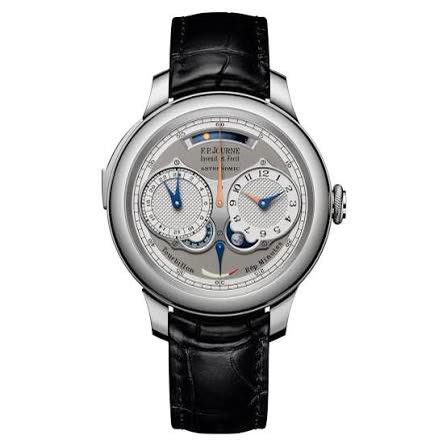
Small on purpose
F.P. Journe makes roughly 900 to 1,000 watches a year, with a team of about 150 to 200 people. Next to the large maisons that is a rounding error — and that is the point. The company has never taken venture capital and, by Journe’s own account, has never paid a dividend; he calls finding his two long-time business partners “the miracle of F.P. Journe,” and says the three decide everything unanimously. In 2018 Chanel took a minority stake of around 20%, a passive investment that left Journe with full creative and operational control.
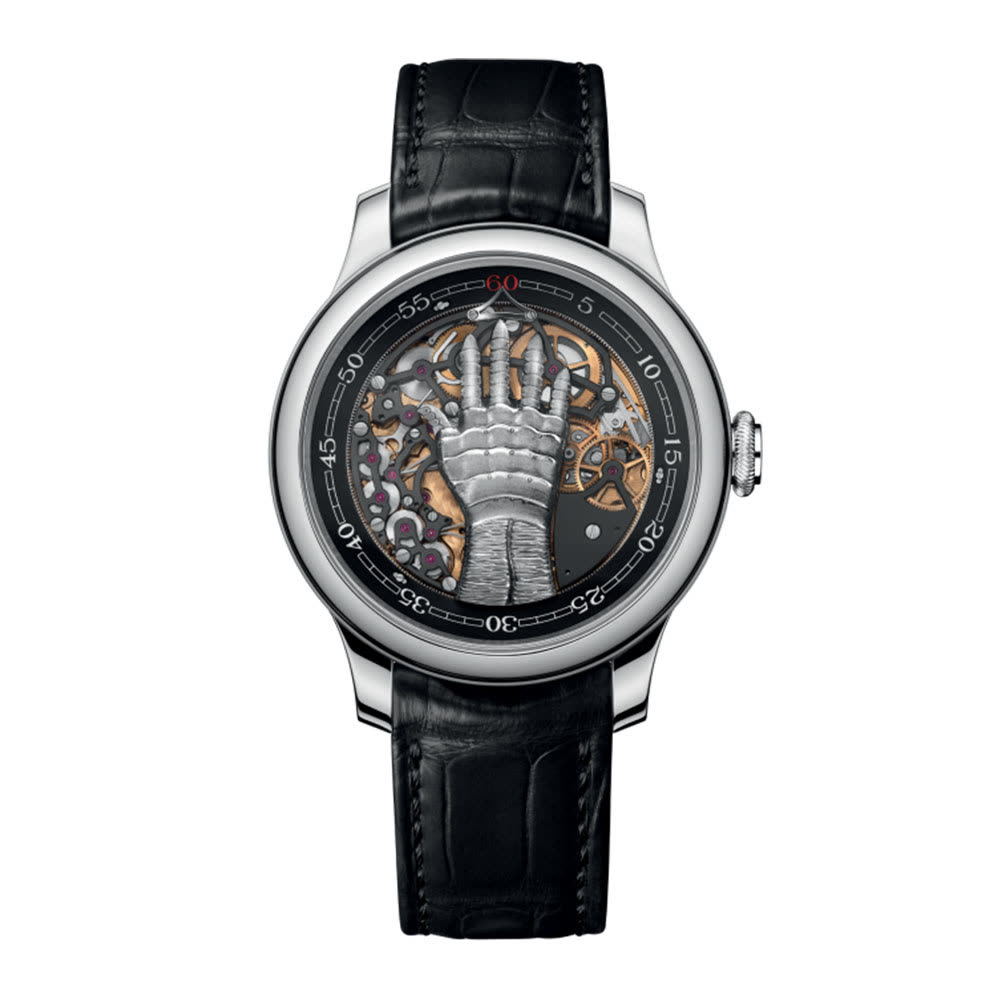
Because no committee can veto him, the brand can take creative left turns: the élégante (2014), an electro-mechanical watch that sleeps when you take it off, and the FFC (2021) — a “bras-en-l’air” watch conceived with filmmaker Francis Ford Coppola that tells the hours on the fingers of a sculpted hand.
The boutique network today
F.P. Journe sells almost entirely through its own doors — 11 company boutiques, with the three US locations branded “Maison F.P. Journe”:
- Europe: Geneva, Paris, London
- Middle East: Beirut, Dubai
- Asia-Pacific: Tokyo, Hong Kong, Bangkok
- North America: New York, Miami, Los Angeles
Beyond those, a small number of “Espace F.P. Journe” corners inside trusted retail partners extend the map into markets that don’t yet have a full boutique. Expansion is deliberately slow: the Miami Maison opened in 2019, New York’s SoHo boutique in 2023, Bangkok in 2024.
Why it’s suddenly impossible to ignore
Demand has completely outrun supply. Multi-year waiting lists are normal, and the early references — Souscription pieces, the first brass-movement watches, the anniversary sets — now set records at Phillips, Christie’s and Sotheby’s. Several early Journe watches have crossed the million-dollar mark; one pair sold together for more than $2.5 million. In collector shorthand, every promising young independent is now described as “the next F.P. Journe” — the clearest sign of how far the brand has moved from those 20 subscribers.
The philosophy for the future
Journe’s stated plan is not to grow, but to hold the line:
- Independence without compromise. Stay founder-led, keep decisions between the three partners, and refuse any growth that would dilute the watchmaking.
- Chronometry first. Constant force, resonance and measured rate performance come before decoration — the watch has to keep time, not merely look complicated.
- Make the parts, keep it small. Dials, cases and movements built in-house under Invenit et Fecit, at roughly today’s volumes.
- Protect the next generation. The F.P. Journe Young Talent Competition funds emerging independent watchmakers — an acknowledgement that the brand’s own beginning depended on someone taking a bet.
From 20 believers and three gold-movement prototypes to the most sought-after signature in independent watchmaking — the strategy from here is simply to keep doing less, better.